Hello. Hello. Welcome, everyone. I'm really excited about this webinar, how the cloud can enhance storytelling. And I've got some amazing, professionals on the line to talk to us about, what how they work in the cloud and what it was like before working in the cloud with their workflows. And they come from, obviously, a variety of backgrounds.
But I'm just gonna give it, like, one more minute for people to maybe what I love to do is chime in in the chat feature and let me know where you're from because we wanna know, you know, what part of the world's tuning in. I know we're a lot of people request this recording, so it's gonna be really fun. I got my Christmas red on because we're going into the holidays or we're in the holidays. So, I'm excited for this.
So let's see. K. Oh, we got someone from Canada.
And New York, Denver.
Love it. Come on down, everybody.
Okay. Well, I wanna kick off today's talk featuring my lovely, ladies here.
And let me first start with Georgie. Or you can wave a little bit.
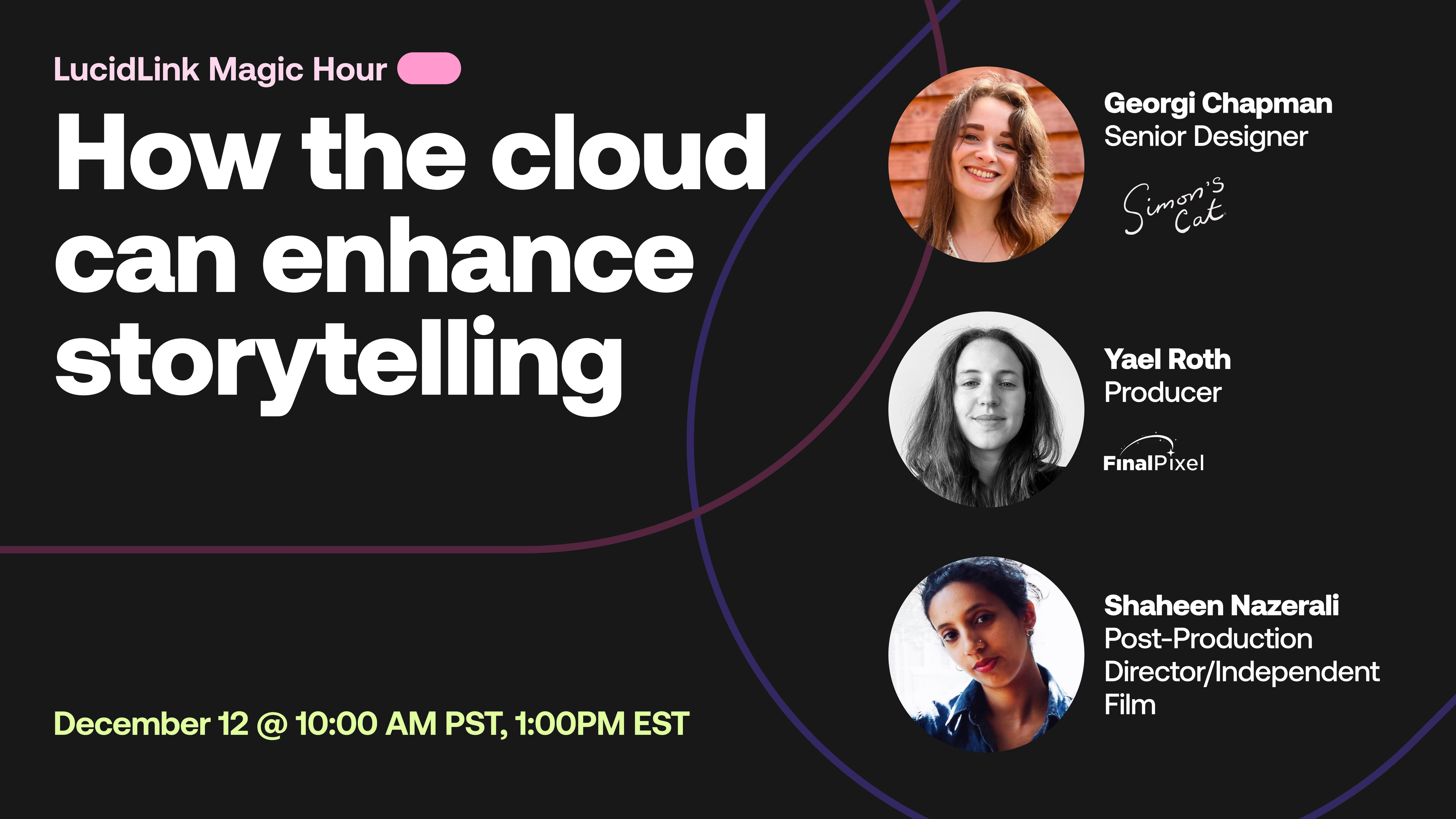
Georgie is a senior designer. She's at Simon's Cat out of the UK, and she specializes in creating artwork for animation as well as formatting, editing, and motion graphics using the Adobe Suite and TV Paint.
And before she joined Simon's Cat, she worked as a freelance motion graphics designer, and she lives in the northeast of, London and holds a degree in animation from Norwich University of the Arts. So I've known Georgie for a while. We did a fabulous, session at MPTS trade show in March in excuse me, in May, last May on animation. She's fabulous.
And along with Georgie, I've been going to introduce Yael Roth. She's the producer at Final Pixel. Final Pixel is another LucidLink customer.
She specializes in virtual production and innovative technologies that are transforming the creative landscape of the film and TV industry. And FinalPixels, check them out. They're doing some amazing virtual stuff as well as some, great education around virtual production.
Previously, Yao, she worked as a freelance producer in VFX and animation. So we've got another animator here contributing to projects for Disney and Netflix.
And prior to her career in media and entertainment, she had a decade in the PR industry, so go communications.
And then last but not least is Cheyenne Cheyenne. Cheyenne Mizrale is a she's a video editor and filmmaker.
She has been a LucidLink customer for a long time. Currently, she's freelancing for Sephora, so we won't have a discount code at the end of this, webinar, which is disappointing, but she's also working on producing some social justice and political campaign ads and directing, a short documentary on Galapagos, giant tortoise.
And as a postproduction professional, she has credits. She's worked, at PBS, HBO, and, Vimeo staff pick. And in twenty nineteen, she was editor in residence at South by Southwest participating in a twenty four hour film challenge at a hackathon.
That's awesome. And she's continued to sharpen her short storytelling in branded content and editing from, you know, Conde Nast Weight Watchers and as recently as the director of postproduction at Vox Creative, which is where we met. So, thanks everyone for joining us.
And, if we have any questions during the, the webinar, we're fine to have you guys just post them in chat or go into q and a.
But with that, introduction, I want to kick off, the webinar. So let me, I wanna just start with, you know, we've met before.
The four of us, talked about this webinar, and, these ladies have a lot of information to talk about. You know? What I wanna review is, like, what is the cloud for you and and what what existed before? So I know that, times have changed, specifically, or maybe the last five years. So, yeah, let's start with you. And and tell me, you know, what is what is the cloud to you now versus what it existed before?
Yeah. I think, thanks for having me, firstly, and for the introduction.
I think the cloud previously was this, and when I say previously, I mean pre COVID, was this thing I for me personally, it was something on my iPhone. It was like it's a an extra storage space, something that my parents were terrified of.
And, you know, fast forward to today, it's just something that's just completely changed, I think, the entire work the landscape of working and and many other environment worlds as well. But, it just really represents real time collaboration, which is, I guess, essential for workflows today and specifically in virtual production.
So, yeah, that's top line.
Yeah. Well, that's you know, first of all, I love hearing that it was on your phone. Thought it was on your phone. That's how you experienced it. And everyone has experienced things differently, and, certainly, COVID, like, pushed us into an era of, looking at remote work technologies, and and some of those are hybrid now. But, before we get into that, Shaheen, why don't you you have some great stories of how you looked at pre and post really adopting the cloud. And so go for it.
Thank you for having me again, and it's lovely to be on the panel with animators.
I I as an editor, I feel like the magic is really in the animation.
So, I like that I get to share a panel with them. I, you know, I I remember when we had this conversation earlier and, I think, like, Yale, you may have mentioned, like, the documents being the first kinda cloud collaboration. And I was like, yeah. Like, before we even talked about, like, media files, it was really just a Word doc that we were able to collaborate on, and that was, like, early stages.
And, again, like, COVID really fast forwarded everything. So there might have been infrastructure in platforms like Adobe that allowed for collaboration, but I don't feel like anyone really wanted to test it, right, and actually go through the learning curve of using it and finding the kinks and figuring out, you know, how can we make this work because we could just meet in person and not have to figure out the kinks. And then, COVID kicked in, and I was working on a documentary, A Choice of Weapons, which is on HBO, a little plug because I love the film. And, it had it it's on Gordon Parks, who's a photographer, and it had maybe, like, six hundred stills, five hundred to six hundred stills, all of which were had a little bit of motion that was added by the editor.
And, you know, it's being cut in Avid, and we got pretty close to a picture lock. And now it was time to replace all of those stills with high res images with, of course, the tightest deadline ever. Right? And, in a traditional environment, we'd all be in an office and we'd have access to the server and, a we would increase our AEs and just kinda go at it, you know, and support the editor.
But, you know, that type of access to Avid, that type of access to, like, being able to teach, you know, anyone the tools to do the work just like wasn't available. And I had seen that, Adobe had had started or Teams existed, but, again, just, like, never really had the opportunity or the support to try it out, on a project. And they also, at that time, had Bridge was still around. I don't know if people remember Adobe Bridge, but it was like the metadata could be logged there.
And, it would give you all the all the specs of your stills, and then there was a library feature, essential libraries, that would allow you to share files, but it could only be small files. So no videos, just stills.
And so what we did was we recut the whole we we re not recut, but we copied the edit in Premiere. So we exported the film, laid it down, and then recreated all the that motion on the stills. And we were able to do that because we were sharing the files.
All the, all the stills lived in the library, we were able to access them at the same time. I was able to designate who was gonna work on what. Everyone could see what each other was working on, and, it was really successful. And that was kind of, like, my first foray into shared editing or collaborative editing, and it was completely contingent on the cloud. And, you know, that that film wrapped and, you know, things moved on, but COVID was still a thing. And I think that was really the the experience that made me go out searching for a similar type of service, but for larger files for video files. You know, how would I be able to share and and and have visibility on what each person is doing?
And it was in that research that I found LucidLink. And I think it was, like I think that incremental, like, building is really important. And I I think was if I hadn't had had if I hadn't have had the experience with, teams in Adobe and the library, I don't know if I would have felt confident trying out something like Lucid. You know, like, the going from a a Google Drive with shared documents to a shared cloud based server that handles video files. I don't think I would have believed it, and I don't know if I would have really been able to get the buy in.
So, So, you know, that was that was, I think, my my recollection. Like, that that's what stays in my mind, like, the pivot onto cloud and and into the workspace.
Well, that that's a great journey and and kind of shout out to Adobe who's our our partner and customer and investor. And, we certainly work very well with Adobe products as well as anything from Avid, Blackmagic, Final Cut Pro, and and Apple. But, but I I'd love to get, Georgie, I'd love to get your perspective too because we've like I said, we spent some time together, and, you have a great story that I'd love for you to share.
Yeah. So, specifically, for Simon's cat, getting a cloud based kind of server was a necessity for us.
Coming off of COVID when we went to work remotely, it kind of changed everything. We were still using our previous internal server, but didn't have great access to it because, because we can get immediate access like we did when we were back in the office. So it was turning to things like downloading files, and then reuploading them to that server, which was, you know, really long winded process. And, we kind of, lost a lot of files in that, period of time.
So, we still keep them on, like, a hard drive, and I'm often, like, called to go back for those. But our production manager, Edwin, he was looking for a solution for quite a while before he came across Lucid, but it's changed everything for us. We've been able to, like, employ people in different countries, and we have such a huge amount of, like, storage needs. And our ecosystem within that storage is pretty fragile because we've got, animations, all the animations, all the compositions, and all the links to all those files as well as, like, promotional work all logged through that storage system.
So we need to keep it, we need to keep it as is.
Oh, sorry. I was just checking the message board.
And, it yeah. It's, it's really been a great help. We've even got sort of a dual system going on where we have an archive storage system and then simultaneously, a current storage system that that we have.
Yeah. And you've been using Lucid how long have you been using LucidLink right now?
Oh, well, I think it's was it twenty twenty one, I think, was when we switched over to Lucid. So it'll be coming on for four years now, I think.
Yeah. We wouldn't go back.
Well, of course, we're biased, but I love to hear that. Yeah.
So, well, thanks thanks for that input.
I I know we've talked about this before, but I would love to see, if you can give me some examples and give it to the audience. I'm sure they wanna see examples of where, Loosely has saved you in your projects. And, you know, feel free to chime in that there's other cloud technologies that also saved you. Let's, you know, let's this is about the whole discussion. So, you know, maybe I'm gonna switch it up a bit. Shaheen, do you wanna take this first one or this one first?
I mean, I think, like, you know, Adobe saved me with Teams and, the library in that in that project because I don't really know how else I would have I just think it would have made my life a lot more tedious being able to manage all the those documents.
Another one that comes to mind is, like, we we had a drive stuck in customs that was coming from overseas. And, you know, I I was like, can you just download Lucid onto your laptop?
You know, and just can you just upload the backup? And, you know, I got a lot of resistance, I remember, but the delay at customs just kind of continued.
So it was like the negotiation time that I had was longer.
You know? It wasn't like, oh, it was just a twenty four hour delay. It was, like, five days. You know?
And, so I had, you know, I had the time to kinda, like, wrangle some support and be, like, somewhat we have people on our team that can really hold your hand through this. Like, Lucid will come in and hold your hand through this. You know? Like, the support that we got from you guys was really helpful, because people are afraid of change and doing things differently, and not everyone's comfortable with, you know, techno new technology, especially not when you're not an edit.
Like, editors, you know, we're we're kinda used to being in the software and, like, interfacing with different softwares, but, you know, producers are often on the ground. And so I think those are the two that come to mind. Yeah.
Getting around customs.
Georgie, do you wanna take that question? Like, what tell me what's changed. What where where where has cloud technology saved you?
I think definitely in just taking out that middleman of transferring files, multiple people are able to go into different files, go into different projects without having to send things back and forth and make updates. And especially because we're going back and, like, making edits to our old files, it kind of it kind of saves that oh, sorry. I'm having a bit of analogy.
It's it saves it saves having to, log things in different spaces where they're harder to access. We just have everything so readily available.
We can delve back into those previous files to to extract them and update them. And, yeah, it's just made everything so much quicker.
Yeah, we've been able to work with people in all different in all different spaces, in different countries and not have to be coming in. We're not tied to the office. So it's, yeah, it's just changed our sort of working life and made things a lot easier.
So sorry about that.
I didn't mean to make you cry, but you got to I know.
I've just got very watery, big blue eyes, I think. So you can have a slight compliment with that.
Yeah. Why don't you take it too? We'll we'll take emphasis off of Georgie.
I've never seen someone get so emotional about software.
But, I think I've definitely had a lot of times when I wish LucidLink was there, and it kind of could have saved a lot of time and a headache. So, again, just to, you know also a hard drive story. We, were shooting in Chicago in the summer, and we asked for four terabyte drive or three terabyte drive, and, usually, you can get them in all different sizes, but there's one that's kind of this size or half of even half a phone size, small one.
I know they say assumption is the cause of all, you know, mess ups, but I just assumed enormous there we go. A normal sized hard drive would have been shared, brought to set. So I got to set. Everything was great. We did a two day shoot.
Travel home, ask the produce the the, the line producer, where's the drive? It was like a ten, fifteen kilo laptop that I had to travel with back from Chicago with a layover in New York, which, you know, a a small hard drive would have been great. But even that, the stress of not only carrying a huge drive, but also the stress of walking around with five hundred thousand dollars worth of content essentially on this little machine, which really could have just been transferred on set directly to Lucid onto a service and could have been easier. So that's one way where I wish it would have saved us.
But, I think just, specifically working in virtual production, you work with Unreal Engine and just being the cloud just being there for artists to be able to access different environments, instantly. So we have a team at the moment in Kansas City on a shoot, and we're just able to send, you know, that hundred gigabytes worth of an environment, which you, you know, you can't really it's hard. It just takes time to to to transfer. So it's just easier to have the cloud, and people in Kansas can just directly access it.
And you're also sending it to different servers with different IT requirements and security requirements, but having kind of the cloud options just makes it so much faster for people to work together. So yeah. So that's, where it saves us, it really is, that. But yeah.
Julie, I think you're muted.
Yeah. I thought my computer was broken. I was like, did the headphones connect to something shit?
Alright. Because the dogs were barking, and they don't wanna hear that because, you know, working from home, working virtually. So, you know, I you know, their overall theme is, like, you you guys have embraced the cloud, which is why we're here. But the expectations, you know, that you have this now for several projects is is kind of what I'm hearing through throughout the discussions.
And, yeah, that was a great story, that you had about that that big big old hard drive that you had to take through. That's that's crazy.
So you guys have some some really good stories about, your creative process and how technology has helped you. And, Georgie, you had a we were talking about, where what you did when you originally, like, a black and white cartoon.
Can you delve into there's a little bit of a story, that you shared with me. Can you can you share more about that story with everyone here?
Yeah. That we've been sort of going back and and coloring all those now. We've updated Simon's cat, and we've been kind of making things more exciting by adding color. So we've got all the old files. The cartoon started about fifteen years ago, and we have all the original animation files were which, of course, at the time were on Flash, but now are on Adobe Animate. So we're often having to go back in now to those, update them to the new kind of resolution that we're using, which is quite a bit bigger, make sure that line works good through, after effects, update and sharpen the line work, then take that into another program we use called TV Paint, Color Those. And, yeah, it's a huge amount of sort of process, but, we're able to keep everything linked like that through the cloud and, access those files and and add to them, probably an unreasonable amount, to be honest.
Yeah.
Well, thank you.
Shaheen, what you have a, you you you touched on the the choice of web, weapons documentary for HBO for twenty twenty, but, I think you had another story about, cutting an avid. And do you wanna share your story?
I think the other story was about, we did a live production, which it it we had to go it wasn't a live production. It was supposed to go live in two weeks, but it was like a entertainment event. It was it was a it was a promotion promotional video for Cadillac. It lasted, like, two hours for YouTube, but it was shot all over the place.
Right? This is actually where the drive was stuck in customs. There was, like, a shoot in Canada. There was a shoot in, like, Detroit.
There was, I think something in Europe. No. Yeah. There was, like, five different locations.
And, because we have such a tight turnaround for these this, like, two hour long, you know, promo, we needed as many editors as we could get, and we had that in house. Like, we had the the manpower in house, but how do you simultaneously work on something? Right? And how do you get everyone the media at the same time and, like, you know, don't have duplicate project files and people cutting over each other stuff.
And I think this was the project where we married Teams and Lucid. It was, like, the second time I ever used Lucid. We did, like, a small project with my my supervisor at the time. And, he worked closely with with your team and did, like, a small three minute, you know, edit.
And it went well. And there where the kinks were, we kinda worked out those kinks, and then we were like, okay. Let's try this in this, like, big stake, you know, tight turnaround, nine editors, different time zones. And, I mean, we delivered, and the people who all the editors loved it.
You know? Like, that was kind of the big surprise for me. Like, I would you know, I wasn't the one in in the software as much as everyone else because I was, a post director at that time. So, you know, that was kind of my, like, not worry, but, you know, if the editors like it, you're in good shape.
Like, you're gonna be able to make the case to keep it. If the people using it don't like it, like, doesn't matter how much it saved you money, you know, how much money it saved you or, like, the time that it saved you, it's that's a different type of resistance that you're gonna have to overcome. And and that, you know, it went really well, and it it professionally did really well for me too. At that point, I was a post supervisor.
And, you know, a little bit after that, I got promoted, and I really think it was because of that project. So thank you for that.
A little bit a little delayed thank you, but I think it was, you know, you know, that that that type of, like, troubleshooting, problem solving, being able to lead a team through, like, a new journey, you know, those are the elements of a manager. And, you know, I think having the right tools allows you to do that and you know?
That's awesome. Well, I I first of all, I love the hearing that. I didn't hear that before. So you're very welcome.
I know we have a we had a we have a customer that, brought in LucidLink and LucidLinks throughout the whole organization, not not just for videos. And he had called our CEO. This is a few several years ago. He called our CEO, Peter Thompson, and said, I got promoted to CTO.
And he was, you know, attributing some of that success to bring in Lucid and and getting those workflows really flowing and making that seamless transition. So I know we're we're certainly, plugging loose, like, but this is this is part of the beauty of it. Before we go in because I wanna talk a little bit more, about the resistance to change, but I wanted, Yael, to to lean in here, because you had talked about a story when you before final pixel even when you worked at Imaginarium. Do you wanna, share some insights?
Yeah. I'm trying to yes. I remember.
It was so working in Imaginarium, which is a motion capture studio, and they were working with a or we were working with a system called f track, which is shotgun or they've renamed it today to something else, but, essentially, it's a way to track multiple artists working on multiple shots.
And the team it just wasn't set up properly. And so the there's a whole new production team that came in and set it up properly, and it just created which is all cloud based, but it just created such an efficient workflow for everyone just to be able to be organized and allow multiple people to work on different things at the same time within one shot and being able you know, having our lead be able to quality check shots and then let the artist in India know, great. You're good to go. You can move on to your next shot, and then people leave feedback on these things. So it really changed being able to use these tools correctly.
And And I know we spoke about this, but this, it was it wasn't easy to get people to use a new tool.
And I'm sure everyone's had that where you try and introduce something that you know is more efficient and helpful, but you'll be met with resistance. But, you know, if you really believe in the product and you really think it can help and you push, then it's always worth the headache to get there.
Yeah. And I and I know, like, you know, of course, when we when we've looked at things, I'm right there with you. Resistance to change. I'm like, what tool are we using now?
Okay. You know? It's a it's another learning curve. So, people make that assumption probably going into stuff, that either they're not gonna like it or they're just frustrated because you're introducing something new to them, and it's like, let me get on with my workflow.
And so listening is just how we show up, like, as a file system. So I I've always said, like, if you'd if someone on your team doesn't need know how to use a file system, then maybe they should be on your team, but it's it's pretty darn easy. But, Georgie, do you have some stories about there that that resistance to change and and how you go about bringing people into the fold to say, like, this is something that's gonna benefit you and let them make their own opinions.
Yeah.
I think we've all been in that situation. I've probably been that resistant to change person recently.
I'm so familiar with certain programs and tools.
We were in that really super lucky position. Well, not super lucky position of we really needed a solution when Lucid came in, so no one was particularly resistant to it. And it was such an easy interface that that we all took to it incredibly easy.
I'm not sure how, going forward, if if you took it to somewhere else, how they'd feel. But, I've been in that situation recently. We've had a younger designer come in and and know all these tools, like Figma and Canva, which are incredibly helpful. I'm so glad I've learned them now. And even different practices, like, within Adobe programs, and I'm trying to pretend I'm not, you know, behind with those things, more efficient ways of working. But then when you have that openness to it, the amount that it can improve the way you work, if you just sacrifice that bit of time to learn how those systems work in the now, then it it always pays off.
Yeah. Yeah.
Agreed. Shahid, do you have a good example that you can share? I don't know.
That's a good example.
A really good example is with the program probably Procreate has changed a lot of things for us.
Our, our big boss, Simon, who does all the main artwork for Simon's cat, he's he's a really old school guy, loves working with pencil and paper, which is is a beautiful thing. Like, we all love that, but sometimes we need artwork quickly.
And especially recently, we've been working with another company called Tactile on games apps, and he needs to, give them artwork quite frequently, edit their artwork that they've been doing. Before that, we were having to go into the office, wait to go into the office, print out, print out bits of paper for him to draw over or upload to Photoshop.
But now he just gets those emails, pops them onto Procreate. It took a while to get him on. He was a little resistant at first, but now he's on. He's, like, making some of the best artwork he's made. He's gotten so experimental with all the brushes.
Well, that's great. That's great to hear me. Create.
Yeah. Yeah.
Next up is Procreate. Oh, sorry.
Yeah. Yeah. I was gonna say I love Procreate. Just I've been using it for my just, like, fun. Like, I tried taking an Illustrator course, Adobe Illustrator, and I was doing it, but, you know, I felt like it was just a bigger learning curve. And then, you know, I saw Procreate, and I was like, I'm gonna try that, and it's really nice.
It has that immediate, like, fun interface, doesn't it?
Yeah. Yeah. It's like paintbrush for twenty twenty four. Like yeah. I really like it.
That's great. So, Shaheen, do you have any other examples of resistance to change? I mean, you've covered a few.
But Yeah.
I mean, you know, we got so my company got acquired, you know, while I was working there. And, and so we merged teams, and the other team was, like, not about it. Like, not about Lucid, not about Adobe Teams. Like, just really kinda, like, if it's not broken, why fix it? Like, let's stick to hard drives.
And, you know, it it was it was sad because I felt like I went from just, like, so much growth, you know, personal growth, professional growth, just like I feel like I really it made efficient and simplified workflow.
And then all of a sudden, I was, like, tracking FedEx labels.
I was, like, so disappointed. And I, you know, I think I think in retrospect, I probably I don't know if that's a battle I should have taken on. You know? It's a hard one. When people are resistant to change, it's a hard one. And you've gotta pick your battles. But, but now, you know, now that I'm, like, working for different companies and I'm, like, as a freelancer again, and I'm seeing how different organizations, like, work differently.
And, honestly, I feel like I feel like the way my old team kind of had to revert or just like the new team, their their workflow, I really feel like it's a long term loss for them because this technology is not gonna go away. It's only going to get stronger. And, you know, Lucid is at a place that I think when when we started using it or I started using it, it was at a place where, like, it was small enough, but powerful enough that it could do the things that you needed, and your team was very available to help us. So any kinks we would get, it's it was just so easy to access people from Lucid to be like, hey.
How do I this is the problem I'm having, and you guys would be like, oh, well, you've gotta start pinning your files. And, like, here's a trick. You know? And this is like, would actually give us in layman terms what's happening in the back end so we could understand, like, what's causing delays, you know, how to improve things.
The bigger a company gets, like, you know, it's harder to have that direct access.
So it's a great time to learn these tools because like I say, they're not gonna go anywhere. They're only gonna grow and only gonna become, like, more standardized. And the learning curve later just might be steeper. You know?
So I think the resistance, it's like, you know, fight your battle, pick your battles, but, you know, you don't wanna fall behind too far where, you know, when it's time to actually have to pivot where you have no other choice, but you have to pivot.
You know, it's just too costly to to catch everyone up. You know?
Right. And there's always misconceptions about, like, when you said you've got costs, you know, the heavy lift. There's a lot of that and and and resistance to change. You know? That's I mean, that's the big thing is is, like, in your case, if it's not broke, why fix it?
But there you know, with any technology, there's the new technology. You know? There's oftentimes the benefits outweigh the struggles, but it's getting people to kinda pull up out of their niche and and and kinda, you know, move forward with that. Gail, do you have any more comments before I move on to the next question?
Oh, you're muted too.
There you go. Sorry. I I guess it's not it's like you say, it's not even just technology. It's industries. And I think, you know, working in film and TV, it's no offense to anyone, but it's such a dinosaur industry and the way and this is even if commercials, you know, you're recently working on a job with an agent a big agency.
Okay. And I know that virtual production is super advanced, and what we do is, like, we're updating stuff all the time. And, you know, in itself, that's always already a challenge to try and get people to convince them to shoot in virtual production and explain to them why, depending on the creative, it's best to shoot in virtual production as opposed to something in traditional, I guess, or practical or location shoot. But, even working with agencies, we did a commercial and they're so stuck in their ways. And it's that thing of, like, it's it's working. Why change? But it's so inefficient and so old school and so it wastes so much time and money, really, to be honest.
And, you know, these unfortunately, they're mega companies, and you can't change them yet.
But so it's it's the frustration is there for sure when you're talking to people and you're like, this is crazy that they're still functioning like that as such a big corporation. But, so yeah. So it's I think it's an industry industry wide thing. I'm sure lots of industries are battling with is how do we move forward from where we were.
Yeah. And it's convincing people. That that that's a great segue. Thank you. To go into the next question is, like, where do you think the media and entertainment industry is gonna change over the next five years?
And, you know, this is this is a big topic, and it's, again, it's you know, I like to think of LucidLink as thought leaders in this space.
We have a lot of we have amazing talented I have amazing talented, team members that all come for the media and entertainment background. So we're not building things in in, you know, in a bubble, and we don't know what the industry is doing and certainly the needs, but it's it's embracing that. So, Georgie, I'm gonna start with you just to see, like so in the next five years because I'm not just talking lucid. Like, again, it's other technologies.
How do you think how do you think the industry is gonna change, move forward or not? And is there some things that can bring it along? And I know it's a big question, but, good segue.
I think we're a really kind of exciting and also scary point, especially, with animation and motion graphics and editing, specifically, as we've spoken about with the introduction of AI.
I think that's gonna change a lot of things. And I know there's a lot of conversation at the moment around, ethics, what programs we're gonna be using, kind of also kind of keeping the quality, keeping quality and keeping the integrity of production while still being able to utilize these new tools that are coming in.
Let them make us more efficient without without kind of compromising on on what we really value with our with our company and our standards, especially with animation.
We're a two d, frame by frame animation company, and, like, we take that, take that quite seriously. So, I think we don't wanna we don't wanna fall behind. There's been a lot of conversation about it definitely at our office recently.
We don't wanna fall behind with technology, especially now that those features are being introduced into Adobe and into, different programs that we already use.
Kind of like a natural evolution.
Yeah. Definitely.
It it's kind of inching forward that bit by bit.
But I think there's a lot more to come. So just keeping keeping aware of that. And, I think things will become more efficient and job roles will change, and it will be, same same as before when, you know, when digital, technologies came in, and they they progress anyway. They've been progressing anyway, and you you do have to keep up to date in a certain way. But, but, yeah, utilizing those those tools without without letting it become sort of lazy as well.
Makes sense.
Yeah.
Jane Janeen, what are your thoughts?
I think something that Yael said at the end was, like, or I guess just the general point of, like, the industry being so antiquated in the way it does stuff. And, and, you know, we see that in the content that gets created too. It's like we're just seeing remakes of everything right now and, you know, like, no one wants to take a risk and, like, tell a different story. But I feel like there's just this natural cycle always that it it's like you kinda need the corporations to buy on a little bit so that you can build, you know, your software or your new thing. And then it kinda comes down to being accessible to, like, independent creators.
And I think then that independent creators, like, you know, integrate it into more just like everyone can use it. You know? It's not just, oh, you have to be working at a company that has access to an enterprise account, and now you can access it. But, you know, now everyone can use it, and then they bring it with them, you know, back into the companies that they work for.
And I think that's what makes, you know, the incremental shift.
And I do think it's an interesting time for the industry, like, given strikes, given AI, given COVID, given the shift of production not being centralized anymore.
So I think things will look different in, like, five years, probably more like ten years.
I'm hopeful that it will be more equitable and, you know, creator driven, but I'm biased.
So, but, you know, I guess we'll we'll see.
Hopefully, we'll all be around to see it.
Well, I hope so too. Yeah.
Yeah.
It looks like you have something to contribute here.
I I mean, it's moving so fast to especially, again, in in virtual production, what we're doing and how we see it shifting it. We've got, on Discord, we've got this channel, which is AI and innovation.
And it's just nonstop being bombarded by new things coming out, but all the time. So I think I agree. It's just making it more accessible for people and then and then making the entry to barrier much lower so anyone can access these tools that were, you know, gatekept. Is that a word? Gatekept? Can you do it past tense?
I'm from Belgium.
Transparency, so the.
I was like, with that accent, yes.
You can do anything. You can make anything a word.
Okay. Yes. So it used to be you couldn't access these things again like you were saying unless you had, like, a company account or the, you know, the the money to do it. So I think it's just allowed it.
It's made it much more accessible, and I think it's just everything's getting faster and more secure and more accessible. And I guess it will just shift and make you know, AI will probably help stuff become more it will automate things better, make you know, especially for production. I think a lot of stuff that we do is extremely tedious and a lot of documents and having, like I've got here, you know, seventy five different tabs open with five hundred different Google Docs and Excel sheets and which is great. Or I would say Google Sheets because it's all on the cloud today.
But just being able to get those to automate and just to run by themselves, I think that will hopefully but, yeah, in five years, god knows what's gonna happen. Right. It's very different to today because five years ago looked very different to today.
So I'd I'd it's, yeah. It'll be interesting for sure.
It sure did. I know with with COVID, LucidLink took off because you couldn't ship hard drives anymore. Like, we people had to look for other solutions.
So you didn't?
No one no one really used Zoom unless you were doing, like, your weekly call with your team in LA once a week.
Right.
It's just Everyone knows what Zoom is.
Yeah. Yeah. And and and talking to to to people, you know, it's it's all virtual. Well, there's a couple things. We LucidLink just rolled out, our new LucidLink, which gives us, some great functionality to address the needs of individual contributors and and freelancers, where you can easily get on the system, take have one account for all your future needs. Because I know, you know, historically, we've seen and continue to see our customers that take their, their their product and their and their work product, and they go to another company, and they wanna use the same tools.
So I'll give you an example. Did did, Daniel Boudin, who did was the editor for the Oscar winning, animated short, the boy, the mole, the fox, and the horse. I've worked with him. Love him. And he's he went from the boy, the mole, the fox, and the horse to another production. He tried to bring in LucidLink, and then they didn't accept it. And he goes, it's such a slog.
So the next project, he insisted that we they use LucidLink because of the efficiencies.
And one more anecdotal story, I was we were speaking at a producer's guild in LA last year. Dave Leopold was giving a a session and just talking about, you know, the the ability to give creatives more time back in their day. And we were talking like, what what would that mean to give them an extra hour or an extra few minutes? And there's a producer sitting next to me, it goes, or thirty seconds.
Right? So you all need those efficiencies, and it's adopting to those those efficiencies and then realizing, wow. What what did we do before? What are we doing now?
And looking back. And so that's like, again, looking to the future to see what else is out there that we might be using that can really, save us time and and help us really hone in on those our creative energy and start utilizing, your talents at a different capacity.
And and I wanna see just to kinda touch on a couple things. We have a few minutes left, but, I wanna see if there's any trends, and I bet you I can guess some, from twenty twenty four that really stand out in your guys' minds and and why.
So, Georgia, I'm gonna start with you. Like, is there anything and I and I I might know what you were gonna say, but that stood out and you see it happening and a big impact in twenty twenty four.
I think going back to what we were talking about, before, I think Yael made some, like, excellent points about the speed of which things are happening and the, demand of content.
That that's kind of especially, like, we're on YouTube and social platforms.
We are definitely we're excited to put out more content, but, definitely, there's the demand for it there. So that's been that's changed our, kind of our approach. We're looking at how we can make the most of of the resources and the the artwork and animation that we already have and bring in anything new that we can and, yeah, keep up to date keep up to date with everything that's happening online. And we we kind of wanna be part of part of the world that's going on, like, part of the those trends and yeah.
Yeah. It's great that you guys are you're receptive. Sounds like your management is is receptive if you have management above you. Yale, do you have any thoughts on this? Like, what what what what do you see in twenty twenty four? Because we're almost to the end.
Yep. You're new.
Sorry.
This doesn't get old.
I think, exactly what you said, the the speed at which everything's going and also, yeah, just the expectations of things to be done now. I I mean, it hasn't changed. It's always been like that. But I think just because things are going quicker, so things are expected to be done quicker, I think. And also just, again, just to touch on AI, it's been huge. And, you know, it doesn't work as efficiently as you can see online, and you see these beautiful things on LinkedIn.
And you you know, they they lead you to believe that it was just done with a click of a button. But, there's still a long way to go, but still where it's come today, it's just really, impressive. And, yeah, I think that that's really what's for me, which was, again, in the final pixel in virtual production, the the big thing was, how we can use AI to streamline our sounds awful, streamline our workflows. Sorry. It's just that but I'm sure everyone uses that as well. You know, it's just the lingo, but, yeah, just to make stuff more efficient.
That's great. Shaheen, you're smiling. You've you probably have some insight here.
I don't know. I I think, AI I wonder how much of a trend it's gonna of it is gonna continue because it is really it is demanding. Like, it is time consuming on the back end. It requires a lot. It's expensive.
And there's resistance from creatives, right, who don't wanna be replaced. So I think that there's gonna be a little bit more of a battle on that front.
I think something that a trend that will continue, which I don't know if it's specific to twenty twenty four, but definitely post COVID is short form content.
I feel like we just saw that world explode of, like, short form storytelling at the same time as seeing Quibi just, like, crash and burn at the beginning of COVID, which was supposed to be this, like, platform for short form storytelling.
But I think, like, even for myself, like, my attention span just isn't the same to, like, sit down and watch a whole movie.
And and and yet I I can't say that my content consumption has gone down, you know, but I just think more of that content is short form. And, so I think that's that space is, for me, an interesting one to watch.
Yeah. That's, you know, really good points here. So we're we're coming to the end of the hour, but, I wanna pose a question that we haven't talked about before.
So you're all amazing creatives in your own right. And, I wanna see is there one thing that you'd like to see from a technology perspective that would help you with your your craft and your job that's probably it's not out there yet. Or maybe there is something out there, but is there something like if you had a magic eight baller, and I want this type of technology to do this, is there anything, I mean, that you would imagine that that that would help you in your craft? Because I'm sure there's a lot of people that wanna know.
Like, yeah. What if we had that? Because ListenLink started from a real world problem of sending, like, how do I get these ginormous files to someone? There's gotta be another way.
You know? But there's you you guys are all so bright. It's like, what what is that that's bugging you? Like, is there something in that Georgie, I'll I'll start with you to see if there's something that comes to mind and, you know, it's not done yet.
It's not created yet.
Yeah. There really is actually.
I I'm I think my, I am very creative and I think sometimes with that comes a cost of it's quite arduous and difficult for me sometimes to do administrative work.
And it's something that everyone has to do, but something that sucks time out of my day and also sometimes I I struggle to keep up with that. I'd love to see a pro like a program that I could keep at the side of my screen that would log my activity with the programs that I'm using so I could up, update my time sheet. My producer would be so happy.
Because sometimes I get to the end of the week, and I'm just having to go back through all my task lists for the week.
So something that would automatically log my activity, for me to look back on, and log log meetings and things like that, have scripts that I could look back on because sometimes it's hard to remember what was said, something that would highlight certain points. Have you?
Yeah.
It's called Assembly. Assembly? Okay. I'm back to mister.
It's amazing. It does all the meeting notes, and it will even send you you can automate it, and it will send you a task list to your emails. Oh, wow. It will send everyone on the call the meeting notes and everyone who signs up to it task list. It's a exactly what I'd like.
That's really neat because I had the same issue where I would have to take notes, but then rely on someone else to take notes on our team. And then the notes were never good because I'd missed something out, but then I was listening, so I forgot. And now you don't need to a, it's more it's more it's great because you can focus on the meeting. And b, also for the rest of the team, you know, I felt even me being a production assistant, having to take notes is just the worst thing ever because you always forget stuff.
You don't actually listen. People are Right. Specifically in production, things change in the meeting a hundred times. So you're writing then, oh, no.
It's changed. You have to go back up. And you so this way, it just cuts that out out of anyone's time just to do notes. So that highly recommend it.
Yeah.
And Matt Matt Schneider, my fabulous colleague on the other end, just posted it in chat, assembly dot a I. So that I I I knew you're gonna answer because I shoot it. Here's the producer on the call. Right?
What about efficiencies? If I but I would like also something that could track all my movements on my computer Yeah. And then put it in a process folder. You know what I mean? So I don't have to type out, this is how you save a document, and then this is you input that folder in here, and then you sign it with that. And then you basically process it, which I have to do all the time, which suck. But it'll be great if someone could just type out what I'm doing on my computer.
Maybe I should quit my job and set it up. That sounds like a good idea.
I'd buy it. Yeah.
That's right. It's a boost customer's right here. Shadi and you what do you think about you guys, these are great ideas.
I know. I don't think I have anything to suggest. I mean, I think the thing I struggle with is, like, finding talent for work. I just still feel like the the best way is, like, through my networks. And that feels wild to me because there's just so much talent all over the world, and we are able to collaborate.
And yet, like, you know, when I need a specific VO artist for something or I need a specific, like, graphic, you know, like, I don't feel like I have a good kinda center point to source that or or be able to, like, review, you know, different different sources. I I I tend to I tend to go with, like, referrals. But I guess, like, that's maybe just because of, like, you also wanna have something vetted and something you can trust. You know? So I don't know. Maybe maybe some kind of platform that centralized that a little bit more and, you know, just was more efficient with being able to find yeah.
Mhmm. Did you guys have any feedback on the I I I about that.
Yeah. Definitely. We we have a similar situation at Simon's Cat when we've had to find animators.
We're going through contacts rather than, it's hard to find I completely agree with you.
Yeah.
And it's weird because there's just so much of it. You know? Like, everyone like, I'll, you know, just go out to a coffee shop and easily meet, you know, five different creatives.
But then if I need to go hire one, I'm like, where do I go?
Right. That's great. That's a good point. You guys, we're almost at the top of the hour. I we could just keep going and going and going because just like when we did our dry run for this, it it it what I love about bringing you all together and and just you having me having you as my friend is just you guys have so much knowledge, and you're teaching me as I go on these these calls with you and this journey, and I think it's great to be able to share this with others in the industry.
So I I I wanna, like, bring y'all on board, you know, for some other sessions. And, just if anybody has any questions, feel free to, like you could send it to us, and we will, field those questions as well. I don't know. I don't see any in the chat right now, but this has been amazing.
Again, thanks for taking the time for everybody on the call and for you ladies as well. And, most importantly, have an awesome holiday season, and I hope you get a little break and a little time off because I know you guys are always pushing hard. So thanks again, and, a recording will be available for this. So take care.
Thank you so much.
Bye. Thank you. Bye bye.
Cloud technology expands the ways in which stories can be told and has introduced new methods for independent filmmakers, studios and artists worldwide to create extraordinary content.
LucidLink empowers leading visual effects artists, editors, animators, designers and filmmakers with creative freedom, enabling new levels of collaborative storytelling. The cloud allows creators to push the boundaries of traditional storytelling, providing the same resources as large studios while enabling greater scalability and flexibility.
Hear from creatives in the industry on how they utilize the cloud.
In this webinar, you'll learn:
Learn the secrets of successful remote team collaboration
Discover how to utilize cloud workflows in production, post-production and virtual production
Find out how to simplify video editing and content creation