Collaboration
Creative production
Video content marketing guide: how to scale in 2026
Last updated 26 May, 2026
14 mins

Video content marketing is non-negotiable for businesses looking to grow.
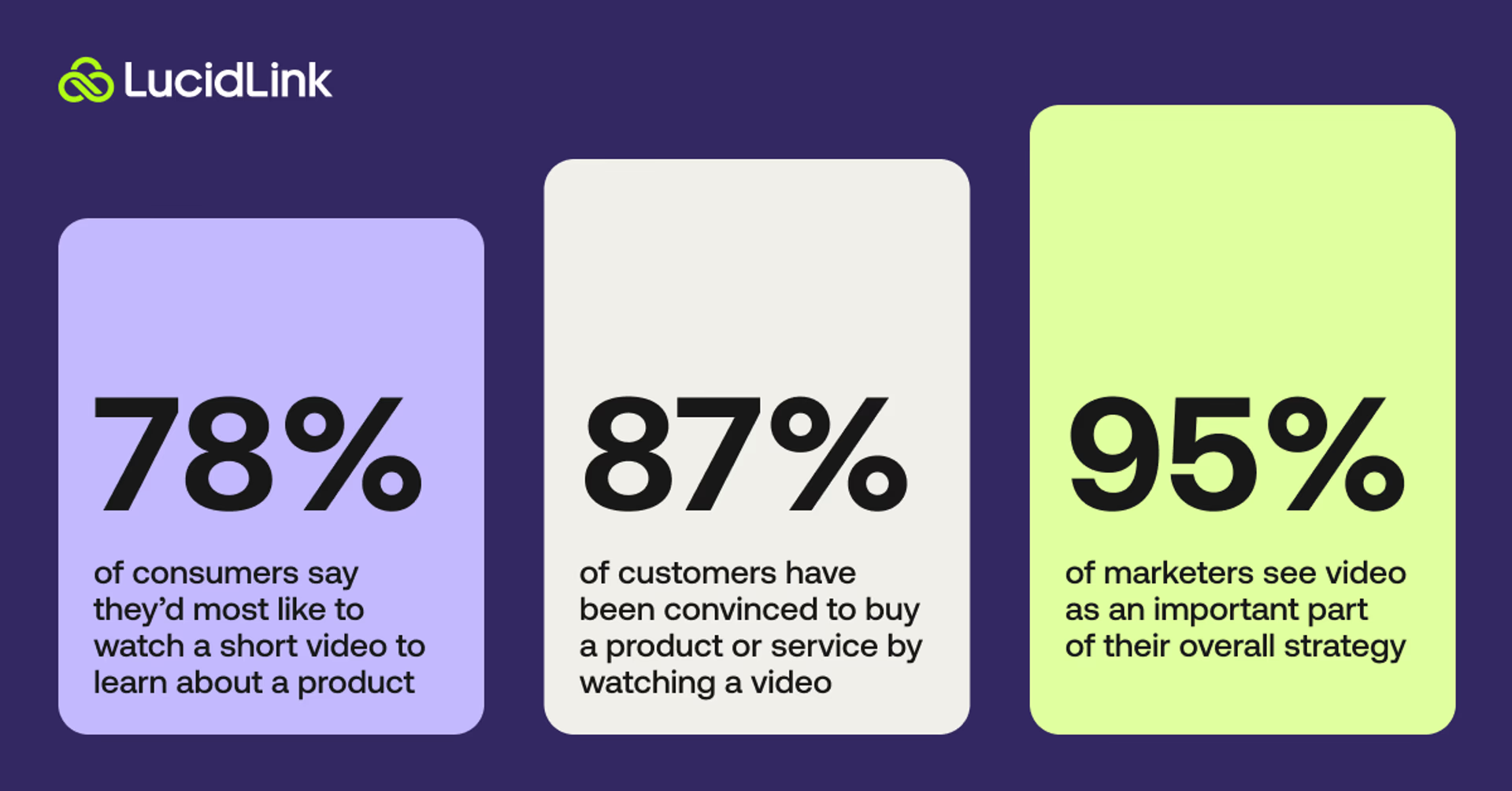
Why? We watch more video content than anything else and its success is still growing on pretty much every metric. The stats don’t lie, according to recent research:
95% of video marketers see video as an important part of their overall strategy
78% of consumers say they’d most like to watch a short video to learn about a product
87% of customers have been convinced to buy a product or service by watching a video
But for marketers, the issue isn’t just producing high-quality video content. It’s doing it at scale to keep up with demand and fuel your campaigns.
Without the right workflow, scaling video content can get messy fast — slowing production, overloading teams and stretching budgets.
This guide will give you strategies to create, manage and scale your video content marketing without the headaches.
What is video content marketing?
Video content marketing is the strategic creation and distribution of video content to attract, engage and convert a target audience.
It uses formats like product demos, social videos and brand storytelling to drive measurable results across marketing and advertising campaigns.
In 2026, success depends on producing high-quality content and scaling it efficiently.
Why video content marketing matters in 2026?
Consider this: YouTube is the biggest streamer by far, with 11.1% of the market, compared to Netflix's 8.5% and Amazon Prime's 4%.
Watching YouTube on TV is now also the most common device — above mobile and desktop. YouTube CEO Neal Mohan suggests this will allow them to introduce new advertising “formats that work particularly well on the big screen, like QR codes and pause ads.”
But what can video content actually do for your marketing campaign?
Higher engagement & retention rates — An enticing 60-second video will engage your audience far more than three paragraphs of text. Video featuring founders or brand ambassadors also fosters a direct emotional and relational connection, increasing retention.
Better SEO & Google rankings — Video content increases landing page dwell time and reduces bounce rates, a key ranking signal. Plus video is highly shareable, increasing the potential for valuable rank-boosting backlinks to your site.
Increased social media reach — Captioned video content performs best on social media where people often consume it with the sound off. Social media content featuring video is also shared 12 times as often as text or image based content.
Boost in conversions & sales — Video is the most preferred and persuasive content format available to marketers today to educate customers and increase sales. Leading to a solid ROI and results in arguably the most important metric: sales.
Brand awareness — Video content communicates brand values, USPs, tone of voice and personality with a rich definition that text and image-based content cannot compete with. Yet, 91% of consumers say video quality impacts their trust in a brand. So you can’t afford to skimp.
How to create a successful video content marketing strategy
This begs the question: what types of video content should marketing teams create and how do they fit together into a cohesive marketing strategy?
Here’s a simple three-step process.
1. Define your goals: for this campaign: who do you want to reach and what do you want them to do? What will be the single true measurement for success?
2. Create a content calendar: depending on your goals, different types of content will be required, published in a specific order at a regular cadence. Map all of this out.
3. Repurpose content: to create more of it and maximize your ROI: transform a single piece of content into multiple publishable elements. For example, a thought-leadership video could be trimmed into short soundbites for social media, these, in turn, could be transcribed into a Tweet-thread.
Types of video marketing content
Not all videos serve the same purpose. The right mix depends on your audience, goals and platform. Here’s a breakdown of key content types and when to use them.
Brand storytelling — Build trust and connection by revealing the why of your business.
Thought leadership — Demonstrate industry expertise by sharing your best insights.
Product demos & explainer videos — Educate potential customers by connecting your solutions to their pain points.
Social video content — Capture attention with short, accessible, useful and engaging content to expand your reach and drive traffic to your site.
Customer testimonials — Showcase what real customers love about what you offer.
UGC — Harness the voice and loyalty of your fans by re-sharing user-generated content.
Customer case studies — Cement social proof about your business with credible and compelling real-world uses of your product or service.
There are plenty of other kinds of video content you could produce including paid ads, broadcast commercials, content sponsorships, influencer marking and much more.
The precise mix of your video content marketing campaign will vary depending on your specific goals, industry
Using video content in your marketing
Let’s say you were launching a new brand with a trio of new products, here’s a short illustration of how your video content could lead your marketing campaign.
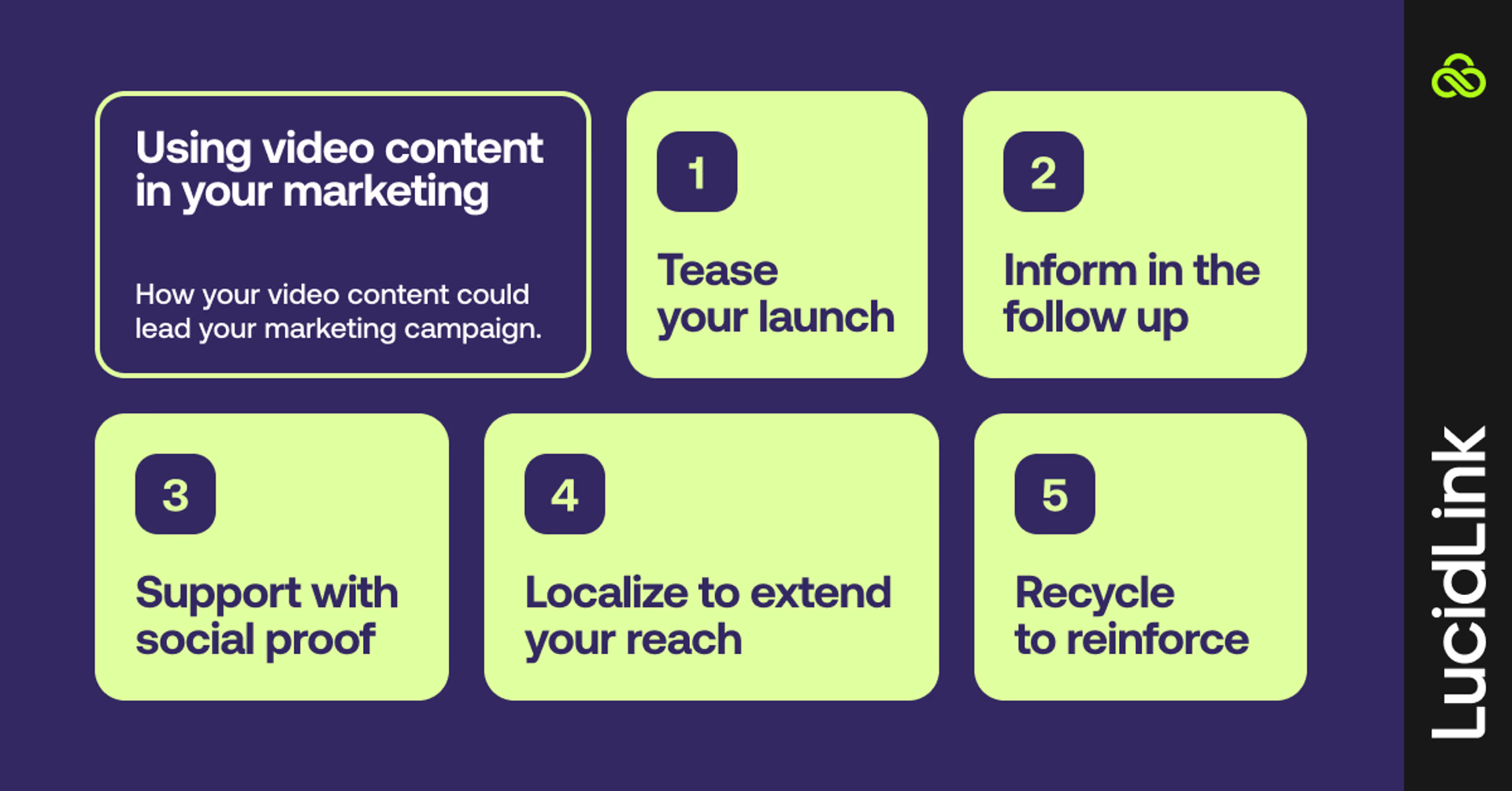
Tease your launch
Start with a 60-second brand launch trailer that delivers an exciting and compelling summary of your brand aesthetic, tone of voice and core mission. The goal is to generate buzz so teasingly sell the sizzle, not the steak.
Inform in the follow up
Follow up with a 3-5 minute brand launch video detailing
your products' main selling points
the expertise behind their development
unique solutions to common pain points.
Encapsulate who you are and what you have to offer to your targeted core audience.
Support this with 60-second explainer videos for each product, explaining how to set it up, use it and combine it with your other products or services. The goal is to show how easy this is and directly drive sales by demonstrating your product in action.
Support with social proof
Capture early customer feedback and testimonials and share these on social media and your sales site. These can help generate social proof, desirability and pre-answer frequently asked questions.
Showcase one or two early user case studies as social proof that your product performs at the highest levels. These will help educate and draw in new customers.
Localize to extend your reach
Transcribe, caption and translate all of these videos into multiple languages to expand your global reach to new audiences and geographies.
Publish blog posts, forum posts and social media threads from the transcribed content to improve your SEO rankings, viral potential and collect backlinks.
Recycle to reinforce
Repurposing the same content across your videos can maximize your ROI and reinforce your brand visuals and messaging.
For example, footage from the initial brand trailer and launch videos could be reused in your case studies and explainer videos.
The biggest video content marketing workflow bottlenecks
If creating all of that video content feels like a tall order, you’re likely suffering from the all too common pain points and workflow bottlenecks that frustrate marketers every day.
Problems like:
Sending large video files quickly and securely to collaborators, clients or stakeholders
Handling the large file sizes video productions create at pace
Enabling effective video collaboration for both in-house and remote teams
Troubleshooting technical issues across video production platforms, services and apps
Managing the approval process efficiently across multiple versions and deliverables
Protecting sensitive media and private IP before launch
Organizing and safely storing a continuously growing content archive
Producing more content with smaller teams, tighter budgets and condensed schedules
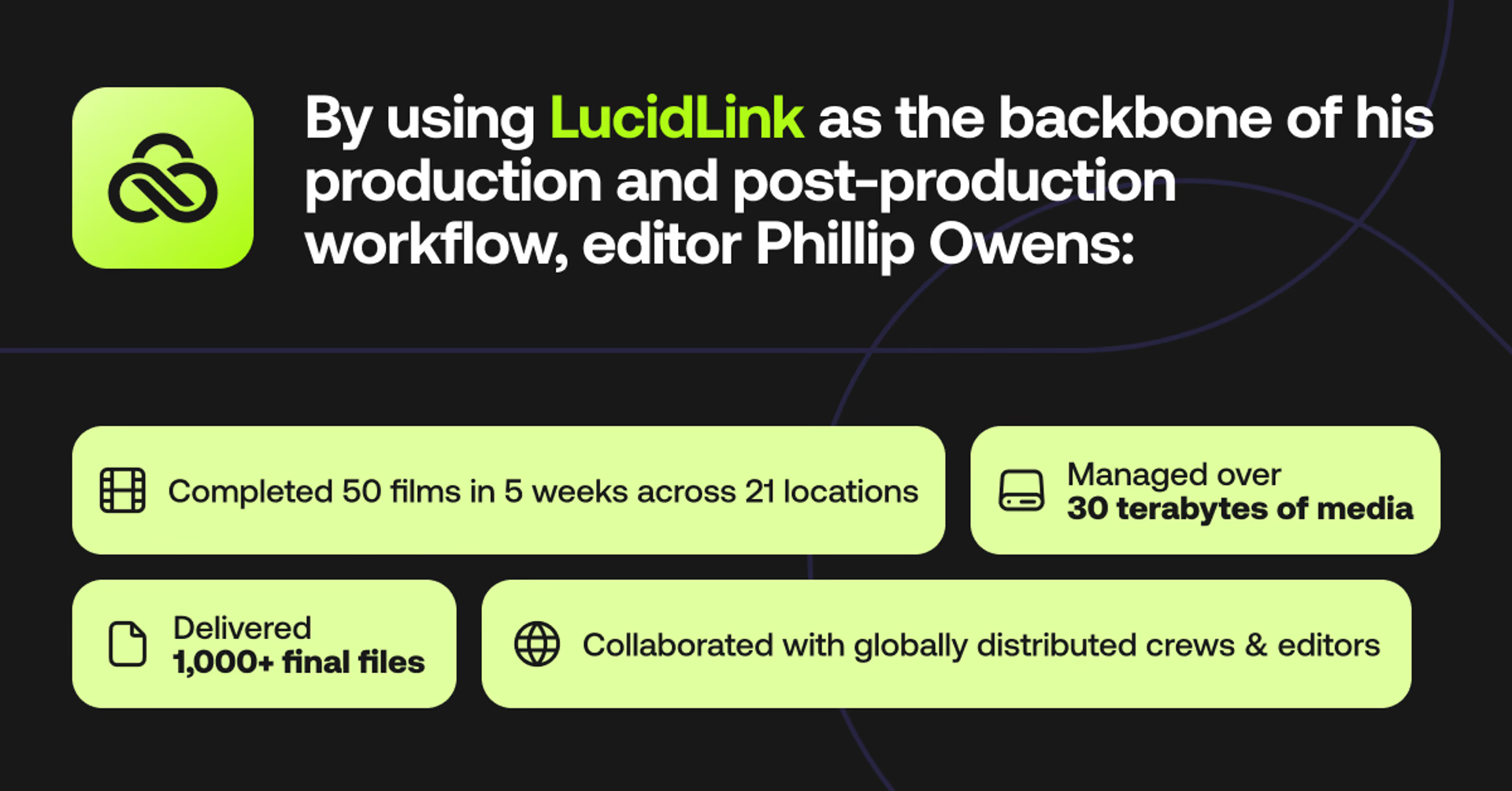
Editor and workflow architect Phillip Owens faced all of these problems when he was tasked with managing a recent project for a global conference.
His brief:
Complete 50 films in 5 weeks across 21 locations
Manage over 30 terabytes of media
Deliver more than 1,000 final files
Collaborate with production crews and editors in various global locations
Phillip’s solution? Use LucidLink as the backbone of his video production and post-production workflow.
"It was my first time using LucidLink," he says. “I had heard of it and people that I trusted recommended it. So I was really keen to try it, but I just kind of couldn't quite believe that it would really do what I really wanted it to do.”
“It could, as it turned out.”
You can read exactly how LucidLink enabled Philip to delight his clients and deliver on budget here.
How LucidLink helps marketing teams streamline their video workflows
Hopefully you’ve picked up a few ideas for scaling your video production for marketing efforts.
But even with a strong plan, execution can get bogged down by workflow frustrations like slow file transfers and version control confusion. That’s where LucidLink comes in.
LucidLink acts as a real-time single source of truth for your collaborative video content marketing. Your workflow isn’t muddied by the confusion of multiple versions, out-of-sync and out-of-date file-sharing practices and disparate Slack messages or email feedback. Instead, you can simplify the entire process of getting from blank page to final deliverable.
Here’s how LucidLink helps video content marketers:
Real-time collaboration, everywhere: collaborate with teammates and agencies as if you’re in the same room. Make edits, upload revisions and see updates in real time without version conflicts.
Instant access: you don’t need to wait for files to download. Get straight to work on even your biggest files.
Eliminate asset chaos: centralize all your marketing assets in one easy-to-access location. With real-time updates and version control, there’s no risk of duplication or working on outdated files.
Alignment made easy: ensure your campaigns meet brand guidelines and cut approval cycle times with centralized feedback and file versions.
Protect your campaigns: keep your sensitive marketing assets safe with enterprise-grade security, including zero-knowledge encryption.
Stick with your favorite tools: LucidLink integrates seamlessly with tools like Adobe Creative Cloud and other marketing platforms.
The best part of using LucidLink is that it works just like a local drive. So it’s easy to get started today.
How to scale video content marketing without losing quality
The challenge for today’s video content marketing teams is how to do everything you’ve been doing already — but at a much larger scale and without reducing the quality of their content.
Fortunately, you haven’t been given an impossible task. There are practical solutions for growing both the size of your team and increasing your total output without breaking the bank.
Here are a few suggestions worth trying out.
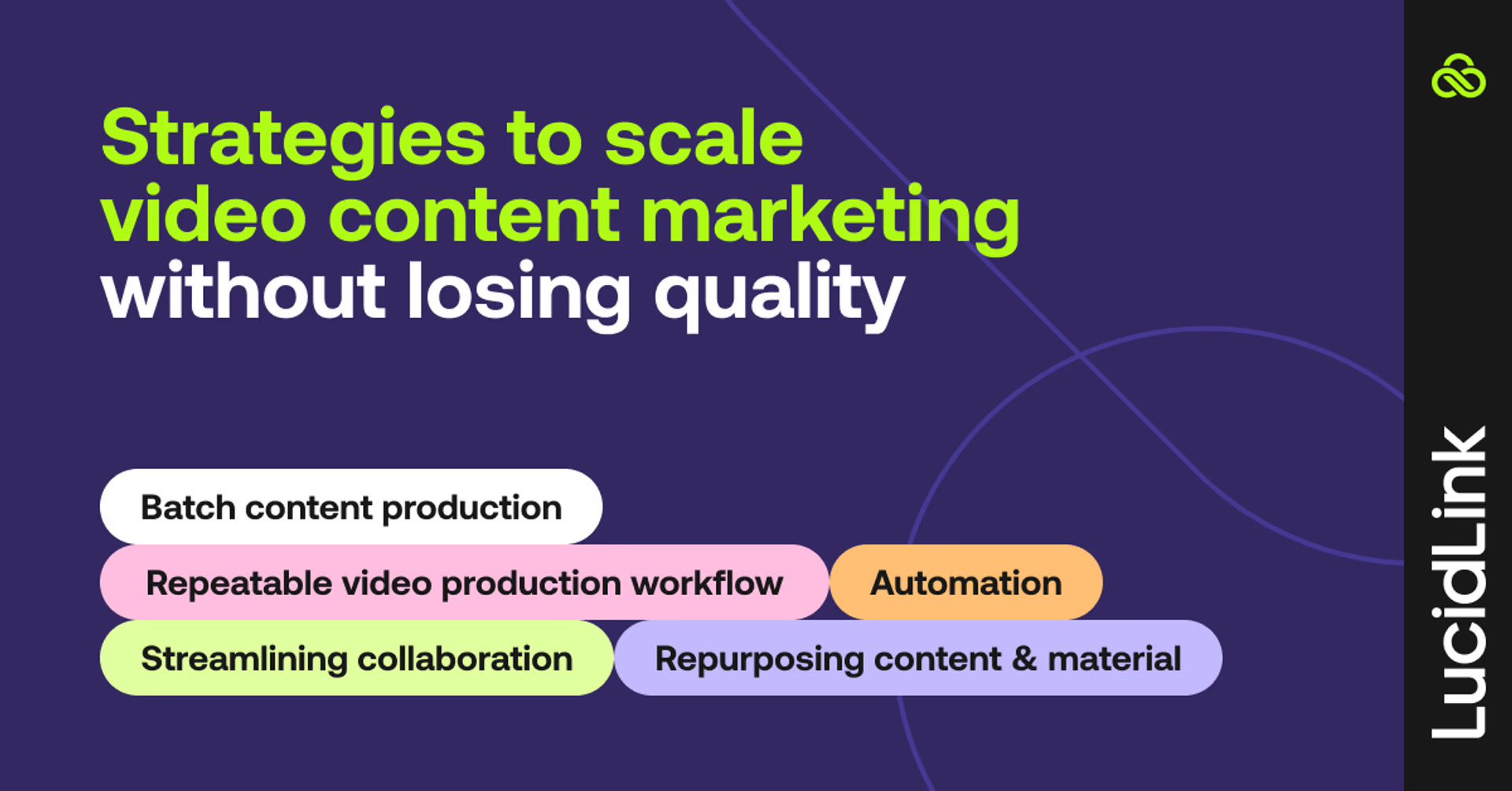
Repeatable video production workflow
When you systemize your video production workflow, you’ll find ways to streamline your process and iteratively improve it as you go. This is a huge benefit to managing your video production in-house where you can compound the impact of your learnings.
Read our detailed guide to improving your video production project management for tips and tricks on getting better on every video.
Batch content production
Having planned your content calendar for the next campaign crunch through a greater amount of video content by batching your production process.
By planning ahead and shooting multiple videos in one session, a single interview can fuel weeks of content — short clips, social snippets and more.
For example, an hour with the CEO could produce 10-15 short social messages from a single interview (even if a wardrobe or location change is required to make them look different).
Use a project management tool like Basecamp, Monday or Asana to map out your content calendar. Or pick from nine others from our top 12 project management tools for creative teams.
Streamlining collaboration
Collaboration is at the heart of the creative process. But without the right supporting tech it can be a slow and frustrating process.
Use video collaboration tools like LucidLink, Frame.io and Adobe’s Creative Apps to break through bottlenecks and simplify the sharing of massive video files. Or any of your files for that matter.

One of the huge benefits of using LucidLink as the heart of your video content marketing workflow is that you can instantly and securely give new talent access to files they need in a couple of clicks. There’s no waiting around for file transfers, uploads, downloads or hard drives to ship — they can get straight to work.
Despite the technical magic happening behind the scenes, LucidLink looks and acts just like any other local drive. This means it’s compatible with every other app and service that can use a local drive.
Automation
Any repeated process that happens frequently is ripe for automation. This will free up your team to focus on their creative tasks rather than media or project management. Two quick examples:
Automate the ingest of your media from production ready for editing with watch folders or client portals (LucidLink’s partner MASV is great for this).
Automate the distributed rendering of your final projects (watch the tutorial above to see this in action) to save time and meet tight deadlines.
Repurposing content & material

Create once, publish forever. While the video marketing tools and resources for producing quality content are increasingly accessible to everyone, it is still a time and resource-intensive process.
Planning how you will repurpose your content as a core component of your marketing strategy and content calendar will help you get the most from your initial investment and increase your output with little additional effort.
Social media editing tools like CapCut or Opus, can automate much of the process of selecting, editing, captioning and publishing short snippets of your existing long-form content.
AI tools such as Strada, which produce automated transcripts can help you craft additional written content in a jiffy, as well as tagging your footage with additional metadata which makes finding specific shots in the future a fast and efficient process.
It’s also sensible to regularly review your existing content archive to see whether a quick refresh or re-edit would generate additional video content for your marketing mix.
If you need some help with best practices for creative asset management, our detailed guide has some nice insights and a rundown of the best tools for the job.
Examples of successful video content marketing
To understand what effective video content marketing looks like in practice, it helps to study brands that have already scaled it successfully.
What stands out isn’t just production quality, it’s consistency, adaptability and the ability to create video systems that can scale across channels and formats.
These examples show different ways brands use video to drive awareness, engagement and growth.
Nike: emotional brand storytelling at scale
Nike rarely leads with product features in its video marketing. Instead, it focuses on emotion-driven storytelling that reinforces its core brand themes of perseverance, performance and self-belief.
Campaigns like “You Can’t Stop Us” combine fast-paced editing, split-screen storytelling and athlete-led narratives to create highly shareable content that resonates globally.
Nike’s video system works because it’s designed to be repeatedly adapted across regions, sports and platforms without losing its identity.
Why it works:
Emotion-first storytelling that scales globally
Consistent brand voice across campaigns
Built for multi-platform distribution and sharing
Apple: product storytelling and visual excellence
Apple takes a different approach: tightly controlled, high-production video that turns product launches into global events.
Its videos for products like iPhone and Mac focus on clarity and simplicity. Instead of overwhelming viewers with features, Apple frames each product around benefits and user experience, supported by cinematic visuals and minimal narration.
These videos are ads and reusable assets deployed across product pages, launch events, paid campaigns and social channels.
Why it works:
Extremely consistent visual and messaging system
Focus on user outcomes, not technical detail
Content designed for reuse across marketing channels
Red Bull: extreme lifestyle content ecosystem
Red Bull has effectively turned video marketing into a media business.
Rather than centering on its product, Red Bull produces a continuous stream of high-adrenaline content across extreme sports, music and adventure storytelling — from space jumps to Formula 1 coverage.
This isn’t campaign-based marketing. It’s an always-on content ecosystem designed to maintain attention, grow audiences and reinforce a lifestyle association.
Why it works:
Entertainment-led strategy that prioritizes attention over product
Extremely high and consistent content output
Strong alignment with culture, sport, and identity
The takeaway: what these video marketing examples really show
Across industries and approaches, the common thread is that successful video marketing depends on scalable systems for producing and distributing content consistently and at quality.
Whether it’s emotional storytelling, product clarity or entertainment-led ecosystems, the most effective strategies share a few things:
A clear strategic goal behind every video
Content designed for reuse and repurposing
Strong alignment with audience behavior on each platform
A repeatable production and distribution workflow
Whether you’re creating cinematic brand stories or high-volume social clips, the goal is the same: deliver value in a format your audience actually wants to watch.
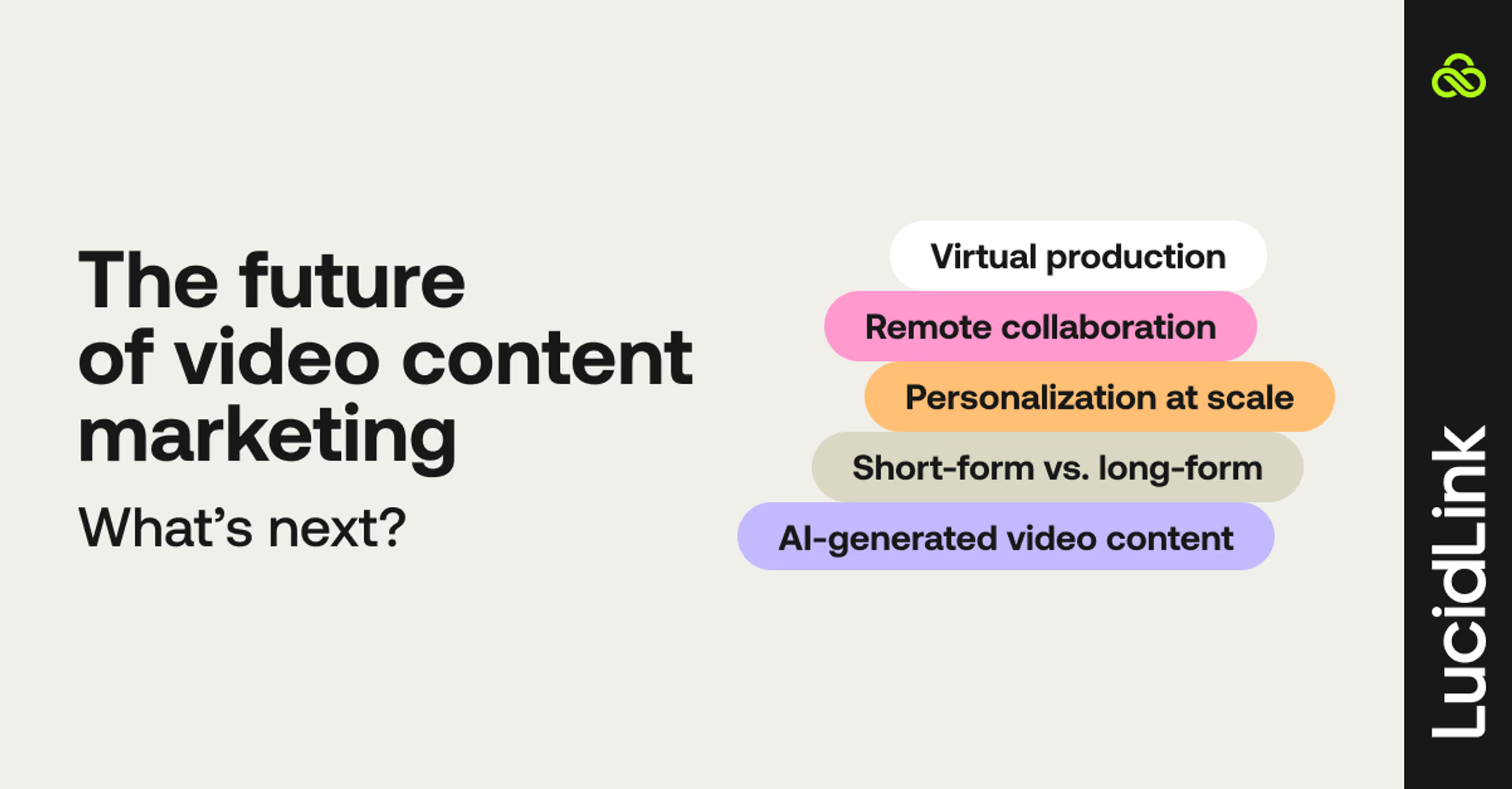
The future of video content marketing: what’s next?
The demand for video content isn’t going anywhere. Thankfully, new tools and approaches are emerging to help you keep up.
Several new trends in the video production space are also worth being aware of, as they are radically changing how video content is made.
These include:
AI-generated video content — Using avatars, text-to-video, AI scripts etc.
Personalization at scale — Using AI to customize specific elements of video content.
Short-form vs. long-form — YouTube on TV drives greater demand for longer content.
Virtual production — Using giant LED backgrounds instead of building custom sets.
Remote collaboration — Using remote teams for both production and post.
Marketing collaboration software — Streamlining feedback, approvals and campaign coordination across teams and partners.
Scaling your video content marketing for a global audience
Localization is another key trend — one that’s transforming how video content reaches audiences worldwide.
AI-powered tools are making it faster, easier and more cost-effective to adapt content for different languages and markets.
It can be as simple as using AI to transcribe and caption your content, and then running the captions through AI translation services to re-caption them in multiple other languages. One video can then be used to reach audiences in many more countries and languages, delivering a huge ROI boost on your initial production budget.
Re-captioning in multiple languages is also an affordable way to increase the reach and usefulness of your existing content at little extra cost or effort.
Taking this one step further is the cutting-edge ability to redub your content into multiple languages using AI. This matches the sound and intonation of the original voice recording but now speaking a different language. The AI also generates new lip-sync to make the mouth movements of the speaker match the new words.
It’s pretty wild.
According to YouTube CEO Neal Mohan, for videos with dubbed audio, more than 40% of the total watch time comes from viewers choosing to listen in a dubbed language.
Using translated captions on your videos and measuring the watch times per language would give you a strong indication of which new languages to invest in with AI dubbing.
Video content marketing starts with better workflows
From AI-powered solutions to streamlined workflow processes, marketing teams now have more resources than ever to scale your video production continuously.
But success isn’t just about adopting new technologies. It’s about using them strategically within a well-structured content ecosystem. By combining repeatable workflows, efficient collaboration tools like LucidLink and smart content repurposing, you can dramatically increase your output without sacrificing quality.
One thing is clear: the marketers who thrive won’t just adopt new tech: you’ll use it to create more meaningful, engaging video content that resonates with your audience.
The future of video marketing is here — and it's more accessible than ever.
See how LucidLink can help you collaborate faster on your video content marketing with a free trial today.
Keep reading

Collaboration
The 12 best cloud collaboration tools in 2026
Cloud collaboration tools supercharge creativity for distributed teams. Discover the best tools for chatting, storage, project management and more.
27 May 2026, 10 mins read

Creative production
7 best ways to send large audio files
Distributed teams working on creative projects need to know how to send large audio files securely and efficiently. Read on to learn the best methods.
26 May 2026, 8 mins read
Creative production
Collaboration
Best video collaboration software in 2026
Discover 15 top video collaboration tools for editing, storage, review and more. Streamline your remote video workflows and boost productivity.
22 May 2026, 9 mins read
Join our newsletter
Get all our latest news and creative tips
Want the details? Read our privacy policy. Not loving our emails?
Unsubscribe anytime or drop us a note at support@lucidlink.com.